
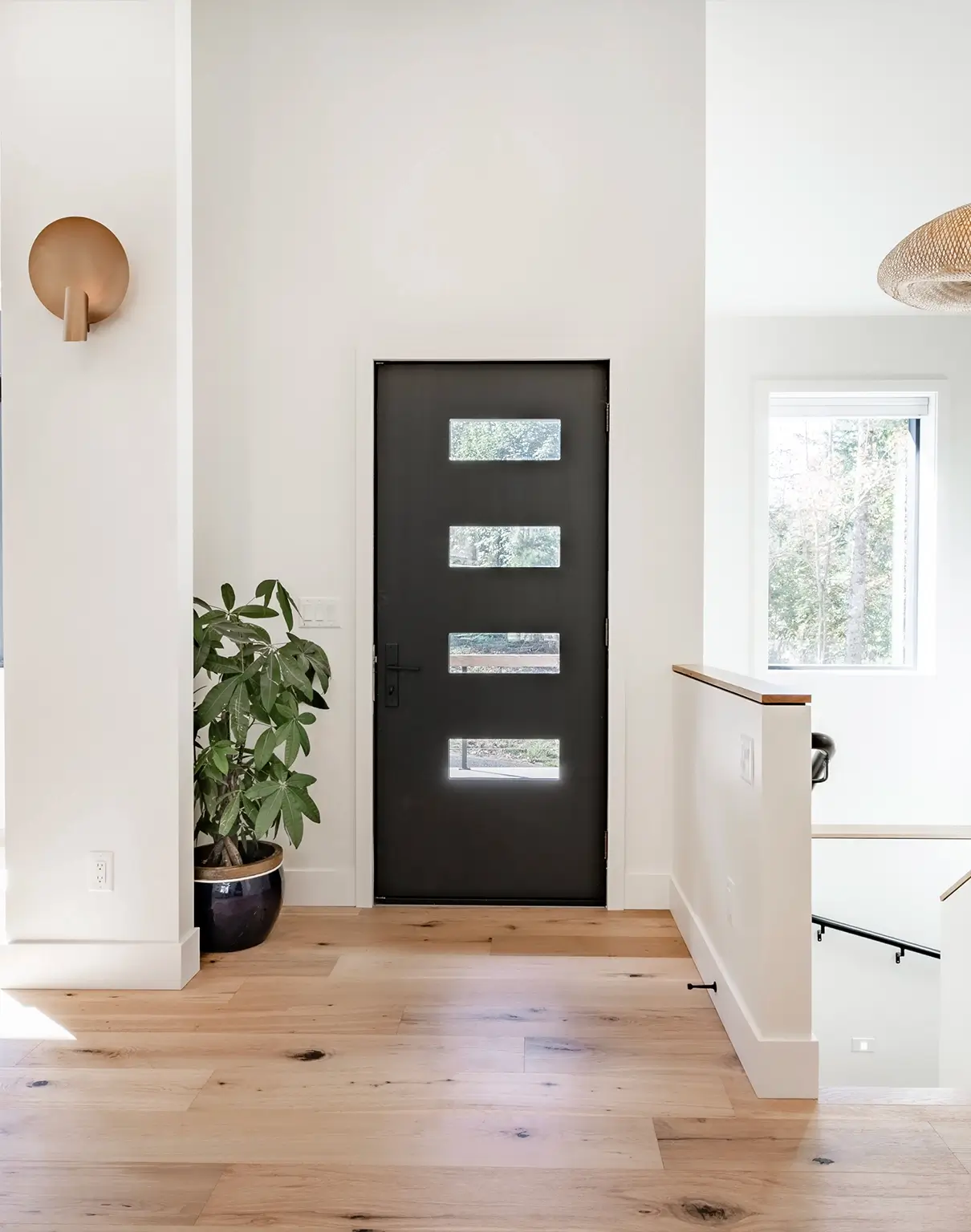
Front Doors – Security, Aesthetics, and Durability in One
Entrance doors are one of the key elements of any building. While they serve a representative function, their primary role is to provide security, durability, and effective thermal insulation. The choice of material has a significant impact on both user comfort and operating costs. There are three main options available on the market: aluminum, steel, and wood. Each material has its advantages, but aluminum is unmatched in terms of durability, modern design, and performance.
Durability and Resistance – Aluminum Wins in Every Category
- It does not warp due to moisture, temperature changes, or UV radiation.
- It does not corrode, making it resistant to rain and snow.
- It requires no regular maintenance – no painting or sealing needed.
Wood and Steel – Are They Worth It?
Wood, although natural and visually appealing, requires intensive care, regular painting, and protection from moisture. It’s also prone to cracking and deformation.
Steel is strong but may rust, especially in humid environments. Moreover, it conducts cold, which reduces indoor comfort.
Conclusion: If you want doors that will retain their appearance and functionality for many years, aluminum is the best choice.
Thermal Insulation and Energy Efficiency – Modern Aluminum Solutions
In the past, aluminum was considered a poor insulator. However, modern technologies have enabled aluminum doors to achieve excellent thermal performance:
- Advanced thermal breaks eliminate cold bridging
- Multi-chamber profiles increase insulation efficiency
- A wide range of infill options ensures outstanding thermal and acoustic insulation
How Do Other Materials Compare?
Steel doors, though robust, often offer inferior insulation—especially budget models.
Wooden doors can offer good insulation but are sensitive to humidity and temperature fluctuations, which may degrade performance over time.
Conclusion: Modern aluminum doors are just as energy-efficient as wooden doors and far more resistant to weather conditions and aging.
Security – Aluminum Doors Offer Superior Protection
Aluminum is highly resistant to mechanical damage, making it an excellent material for secure entryways:
- Sturdy aluminum structures can be fitted with multi-point locking systems and reinforced components
- The rigidity of aluminum allows for the installation of thick, burglar-resistant glazing and advanced security features
- Steel doors also offer good protection but are prone to visible damage, and often lack visual appeal
- Even reinforced wooden doors are generally less secure than aluminum or steel
Conclusion: If security is a top priority, aluminum doors are the best option, combining strength with compatibility for advanced locking systems.
Design and Aesthetics – Modern Style Encased in Aluminum
Aluminum doors align perfectly with today’s architectural trends. They’re minimalist, elegant, and exceptionally functional:
- Slim profiles allow for large-format doors without compromising stability
- Available in any RAL color or wood-effect finish for full design flexibility
- Easily combined with expansive glazing, adding prestige and elegance to any entrance
- Wooden doors offer a timeless look but may not suit modern buildings. Steel doors, on the other hand, often appear harsh and less refined.
Conclusion: Aluminum offers virtually limitless design possibilities, combining elegance with exceptional functionality.